The core of these cases is not simply a debate “for or against deep-seabed mining.” Rather, it concerns the extent to which an international court may intervene when the multilateral regulatory system established by Part XI of UNCLOS comes into direct conflict with a parallel route relying on the domestic legal system of the United States, a non-party to the Convention.
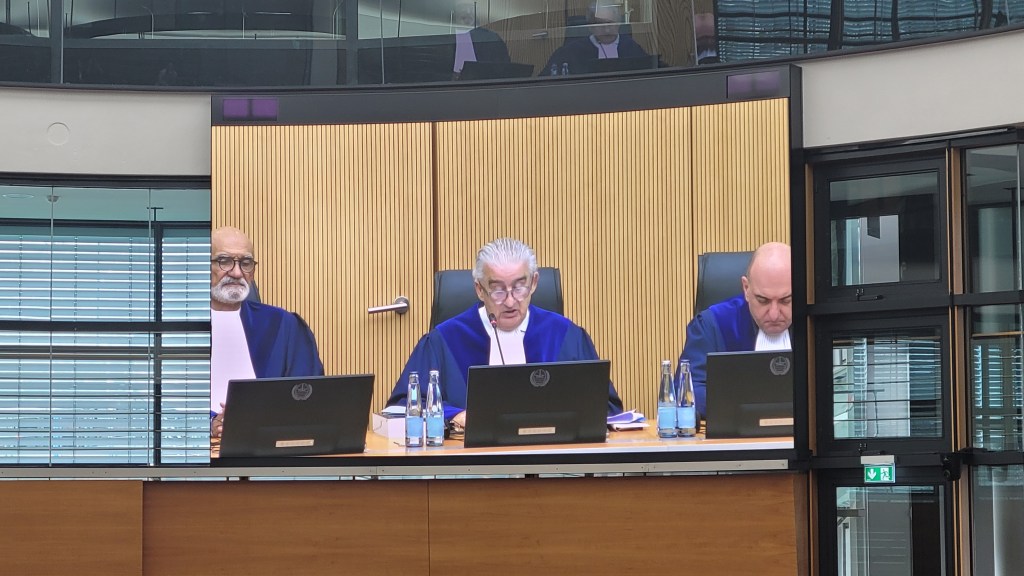
On 18 July 2026, the Seabed Disputes Chamber of the International Tribunal for the Law of the Sea did not grant NORI and TOML everything they had requested. Instead, it prescribed provisional measures on the following basis: the ISA inquiry itself could continue, but the inquiry had to comply with due process. At the same time, the Chamber made clear that it had not yet decided the merits, its final jurisdiction, or whether the U.S. route was substantively unlawful.
The Actual Legal Structure of the Cases
The precise case titles are:
- Case No. 34, Nauru Ocean Resources Inc. v. International Seabed Authority
- Case No. 35, Tonga Offshore Mining Ltd. v. International Seabed Authority
The applicants are NORI and TOML, ISA exploration contractors sponsored respectively by Nauru and Tonga. The respondent is the International Seabed Authority.
According to TMC’s first-quarter 2026 filing with the U.S. Securities and Exchange Commission, both NORI and TOML are wholly owned subsidiaries of TMC. TMC performs its principal corporate functions in Vancouver, Canada, while its U.S. subsidiary, TMC USA, was pursuing proceedings before NOAA.
Accordingly, although the cases appear formally to be disputes between private contractors and an international organization, their substantive structure is considerably more complex. It involves the intersection of:
- a Canadian-linked parent company;
- ISA contractors sponsored by Nauru and Tonga;
- a U.S. subsidiary;
- U.S. regulatory authorities; and
- the ISA legal regime.
In the NORI case, this structure was further combined with the issue of contract extension. As confirmed in the ITLOS Order, NORI’s ISA exploration contract was concluded on 22 July 2011 and was due to expire on 22 July 2026. NORI submitted an application for extension on 19 January 2026.
Chronological Development of the Dispute
In its decision ISBA/30/C/19 of 21 July 2025, the ISA Council requested the Secretary-General to seek additional information from contractors where there was a risk of contractual non-compliance under section 10.3 of the standard clauses.
With particular reference to section 27, the Council directed attention to:
- conduct directly or indirectly connected with activities in the Area; and
- the obligation to act consistently with the multilateral legal regime established by UNCLOS and the 1994 Agreement.
Paragraph 10 of that decision specifically called for attention to direct or indirect conduct that could be contrary to the multilateral legal regime.
The Secretary-General subsequently issued Circular/2026/001 on 15 January 2026, and all 21 contractors responded by February. According to the report of the Legal and Technical Commission, all contractors stated that no compliance risk existed. However, two contractors challenged the legality of the Council’s decision and the circular and reserved their rights to dispute settlement.
Nevertheless, in its March 2026 report, the LTC concluded that the Council’s inquiry procedure was consistent with UNCLOS and the standard clauses of the contracts. It also stated that “unilateral regimes” posed a threat to the Convention and the ISA’s multilateral framework.
The Commission identified one contractor for a further request for information. NORI and TOML were later informed by letters dated 16 March 2026 that they were the contractors concerned.
A particularly important point is that the Council’s decision ISBA/31/C/18 of 19 March 2026 characterized their identification as a preliminary stage involving “specific attention to possible non-compliance.” It expressly stated that this did not constitute a final determination of non-compliance.
At the same time, the Council directed the Commission to continue the inquiry while ensuring:
- due process;
- transparency;
- fairness; and
- an opportunity for the contractors and sponsoring States to respond at every stage.
These standards subsequently became the direct basis upon which ITLOS controlled the conduct of the ISA.
U.S. Intervention and the Circumvention Strategy as the Central Variable
What elevates these disputes beyond ordinary contractual litigation is the structural fact that the United States is not a party to UNCLOS.
A January 2026 report of the U.S. Congressional Research Service expressly confirmed that the United States was not a State Party to the Convention.
Despite that status, the United States adopted Executive Order 14285 in April 2025, directing the acceleration of seabed mineral development. In January 2026, NOAA issued a final rule under the Deep Seabed Hard Mineral Resources Act, streamlining the process by providing for consolidated review of exploration licence and commercial recovery permit applications.
Against that institutional background, TMC USA submitted applications to NOAA relating to deep-seabed mining.
As of July 2026, NOAA’s DSHMRA application-status materials showed that two TMC USA exploration applications and one consolidated application were under consideration.
The Congressional Research Service also explained that areas covered by TMC USA’s exploration applications overlapped with portions of the ISA contract areas held by NORI and TOML.
TMC itself stated in a 2025 SEC filing that it was increasingly concentrating on the U.S. DSHMRA pathway. At the same time, the company maintained that the NOAA process did not affect its ISA exploration contracts.
This was the substantive background to what the ISA regarded as a parallel route circumventing the multilateral order.
In legal terms, therefore, “U.S. intervention” did not mean direct military or diplomatic intervention by the United States. Rather, it meant institutional intervention through the overlap between the domestic licensing system of a non-party State and contractual rights created under the ISA system through sponsoring States that are parties to UNCLOS.
Similarly, the expression “circumvention strategy” is more accurately understood not merely as political rhetoric used by environmental organizations, but as a parallel legal strategy aimed at preserving both the U.S. route and the ISA contractual route simultaneously. This understanding is supported by:
- the ISA’s express reference to “unilateral regimes”; and
- TMC’s own SEC disclosures.
What the Chamber Actually Decided on 18 July
The first point requiring correction is that the Chamber did not finally confirm its jurisdiction. It recognized only prima facie jurisdiction for the purpose of provisional measures.
In both the NORI and TOML cases, the Seabed Disputes Chamber held that article 187(c) of UNCLOS provided a prima facie basis for jurisdiction at the provisional-measures stage. It expressly left open the possibility that final jurisdiction could be reconsidered at the merits stage.
Thus, the formulation “the Chamber recognized jurisdiction” is directionally correct, but technically it should be stated as:
The Chamber provisionally found that it had prima facie jurisdiction; it did not finally determine jurisdiction.
The second central issue concerned article 189 of UNCLOS.
The ISA argued that the Chamber was barred from reviewing the exercise of discretion entrusted to the Authority. The Chamber, however, distinguished between:
- substituting its own judgment for the substantive discretionary decision of the ISA; and
- determining whether due process had been respected in the procedure by which that discretion was exercised.
The Chamber reasoned that compliance with due process was external to the substance of the Authority’s discretionary power. Accordingly, article 189 did not prevent judicial review of whether the relevant procedures had been lawful and fair.
This is the most important legal holding in the Orders.
Third, the Chamber held that the rights to due process and fair treatment asserted by NORI and TOML were, at least at the provisional-measures stage, plausible rights.
Those rights included:
- the right to know the case or concerns raised against them;
- the right to respond to allegations;
- the right to have decisions affecting their legal position taken through a lawful, transparent, and impartial procedure.
The Chamber further considered that such procedural rights could not always be fully restored by subsequent financial compensation. The loss of a timely opportunity to participate in an ongoing procedure is generally not capable of being completely repaired after the event.
In other words, the interest protected in these cases was not principally a substantive “right to mine,” but rather the contractors’ procedural legal position.
What the Chamber Ordered—and What It Did Not Order
The Chamber did not grant the principal relief sought by NORI and TOML, namely a complete suspension of the ISA inquiry.
Instead, it ordered the ISA:
- to act in accordance with the applicable legal framework and due-process requirements in the procedures connected with the inquiry; and
- to provide NORI and TOML with clear and relevant information concerning the procedure and the questions being examined, so that they could respond meaningfully.
In both cases, the parties were directed:
- not to take any action that might aggravate the dispute;
- to cooperate with one another; and
- to submit reports on the implementation of the Orders by 31 August 2026.
The NORI case contained an additional element absent from the TOML case.
Because NORI’s contract was close to expiry, the Chamber specified in the NORI Order that due process applied not only to the inquiry procedure but also to the contract-extension procedure.
By contrast, the TOML Order focused only on the inquiry and did not contain a separate measure concerning contract extension.
This distinction corrects any treatment of the two cases as completely identical:
- NORI: inquiry plus contract-extension procedure
- TOML: inquiry procedure only
Another point must also be stated clearly: the Chamber did not determine whether the U.S. NOAA route was lawful under international law.
The substantive questions remain for the merits, including whether the use of the U.S. pathway by NORI, TOML, their parent company, or related entities:
- constitutes non-compliance with the ISA contracts;
- conflicts with the common heritage of humankind;
- or implicates the due-diligence obligations of the sponsoring States.
The Orders of 18 July were therefore provisional measures of the following character:
While these substantive questions are being examined, the ISA must itself comply with due process.
Strategic Significance and Practical Conclusion
The principal significance of the Orders is that they clarified, for the first time, that however strongly the ISA may seek to protect the public order of the deep seabed, it cannot dispense with procedural legitimacy when questioning contractors, conducting an inquiry, or examining a contract-extension request.
At the same time, the Orders did not give the contractors a licence to proceed on the basis that “the U.S. route is legally acceptable.”
On the contrary, the ISA documents issued in 2025 and 2026 consistently expressed concern that unilateral domestic regimes could threaten the UNCLOS multilateral framework. They also reminded sponsoring States of their obligations to:
- ensure contractor compliance; and
- avoid arrangements that would undermine the common heritage principle in article 136 of UNCLOS.
The case may therefore be summarized in a single sentence:
When a commercial parallel strategy relying on the legal pathway of the United States, a non-party to UNCLOS, came into conflict with the ISA system, ITLOS postponed judgment on the substantive legality of that strategy but declared that the ISA’s handling of the matter remained subject to judicial control through the requirements of due process.
That is the true significance of the Orders of 18 July.
The U.S. variable and the circumvention strategy were clearly among the factors that triggered the dispute. However, the immediate legal standard that determined the outcome of the provisional-measures proceedings was ultimately due process.
The most precise final formulation is therefore as follows:
Although U.S. involvement and the circumvention strategy formed the background variables of the dispute, the direct subject of the ITLOS provisional-measures Orders of 18 July was not the substantive legality of that strategy itself. It was whether the ISA complied with due process while investigating those suspicions and dealing with the extension of NORI’s contract.


Leave a Reply