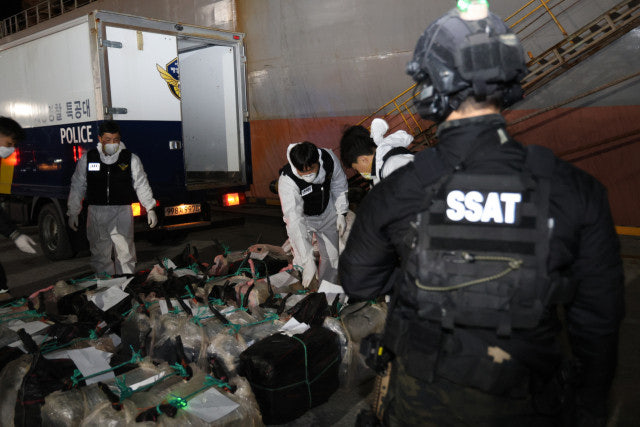
Introduction: A Record-Breaking Seizure and Its Significance
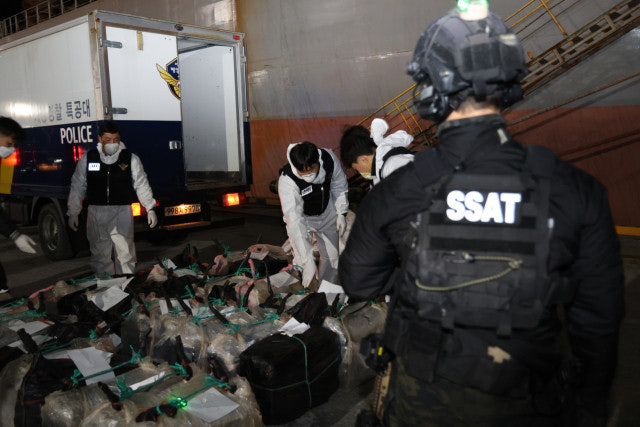
On April 2, 2025, South Korean authorities made the largest drug bust in the nation’s history, uncovering approximately two tons of cocaine at the Port of Okgye in Gangneung. The cocaine was concealed in a secret compartment behind the engine room of a Norwegian-flagged bulk carrier – a vessel later identified as the M/V Lunitaworldcargonews.com. This massive seizure, more than five times the size of Korea’s previous record (404 kg of meth in 2021), marked a watershed moment for South Korea’s role in global drug traffickingreuters.comworldcargonews.com. It signals a structural shift in transnational narcotics routes, firmly placing East Asia on the map as an emerging destination market for cocaine. The incident at Okgye – a relatively obscure, secondary port – provides a lens to analyze how traffickers are adapting their strategies, exploiting security gaps, and expanding their reach into East Asia. In the following sections, we examine the new trafficking patterns exemplified by this case, the vulnerabilities it exposed in South Korea’s port security, and the broader regional implications, including the advanced tactics (flag-hopping, port triangulation, document fraud) that facilitated the smuggling operation.
Shifts in Trafficking Strategies: East Asia on the New Cocaine Route
The Okgye seizure illustrates a broader shift in transnational drug trafficking strategies, with East Asia emerging as a new frontier for cocaine trafficking. Historically, South Korea and its neighbors saw little cocaine traffic, but recent years have seen traffickers diversifying routes and destinations. Criminal organizations from Latin America are increasingly integrating East Asia into their logistics, establishing a trans-Pacific corridor for cocaine shipments. Rather than relying solely on traditional markets in North America or Europe, traffickers are now routing cocaine across the Pacific Ocean to countries like South Korea, Japan, and China – attracted by rising demand and lucrative prices. According to the United Nations Office on Drugs and Crime, there has been a 35% increase in cocaine seizures along “non-traditional” routes to Asia since 2019, reflecting a deliberate strategy of route diversification.
Critically, these new routes often span multiple continents and intermediate stops, making them far more complex and circuitous than older trafficking paths. The Lunita’s voyage is a prime example: it departed Latin America and made stops in Mexico, Ecuador, Panama, and even a port in China before arriving in South Korea. This triangulation of ports is designed to confound authorities by obscuring the true origin and destination of the cargo. Each stop provided an opportunity to mingle illicit cocaine with legitimate trade flows, exploiting the “noise” of normal commerce to hide the signal of smuggling. As a result, East Asia’s role has transformed from a peripheral concern to a central node in global cocaine networks. In fact, multiple large seizures in early 2025 – including the Okgye bust and another 720 kg cocaine haul at Busan Port in May – underscore that South Korea is being actively targeted as part of a trans-Pacific trafficking corridorwindward.aiwindward.ai. The Okgye case thus exemplifies a consolidated trend: Latin American cartels are retooling their operations to move product across the world, leveraging longer maritime routes and multi-stop voyages to reach the high-value markets of East Asia.
Exploiting Port Vulnerabilities: Secondary Ports as Soft Targets
The choice of Okgye Port for this record shipment was no accident – it exposes how traffickers pinpoint vulnerabilities in port security, especially at secondary or less-monitored harbors. Okgye is a small port on South Korea’s east coast, primarily handling bulk commodities like cement, coal, and minerals. Unlike the major container hubs of Busan or Incheon, Okgye operates on a low profile with modest cargo volumes and less sophisticated infrastructure. This made it an ideal target for smugglers seeking to minimize the risk of detection. Port operators at Okgye would not typically expect a massive cocaine load hidden in what appeared to be an empty bulk carrier coming to load mineral cargo. Indeed, the Lunita was officially reported as arriving empty to pick up a limestone shipment, a ruse that raised little suspicion ahead of its searchkoreajoongangdaily.joins.com.
Such secondary ports in South Korea (and elsewhere) often lack the advanced scanning technology and rigorous inspection protocols found in top-tier ports. A study by the Korea Maritime Institute highlights a stark gap: 83% of South Korea’s secondary ports do not have high-capacity container scanners, and fewer than 5% of incoming shipments at those ports undergo physical inspection. Okgye’s “low visibility” environment – with limited customs manpower and no automated container x-ray systems – meant the smugglers had a high chance of slipping through unnoticed. This gap in maritime security is not unique to Korea; it echoes a global pattern where drug syndicates shift operations to less guarded entry points. Similar tactics have been seen with secondary ports in regions like West Africa and Central America, which traffickers use to evade the tighter controls at major trade hubs. In the South Korean context, ports such as Masan or Pyeongtaek have been noted as potential soft targets due to “low institutional visibility and the absence of high-resolution scanners”, enabling undetected entry of illicit cargo.
Another vulnerability underscored by the Okgye incident is the reliance on foreign intelligence for interception, pointing to limitations in Korea’s own interdiction network. In this case, authorities acted on a tip from the U.S. FBI and Homeland Security Investigations, which warned of a suspicious vessel inboundkoreajoongangdaily.joins.com. South Korea’s customs agency is not formally integrated into certain international maritime drug enforcement platforms (such as the MAOC-N in Europe or the U.S.-led Operation Martillo). This relative isolation can delay information sharing and coordinated actions against transnational trafficking. The Okgye bust, while successful, highlighted that without proactive intelligence or enhanced screening, a well-concealed shipment in a secondary port could easily have slipped by. Going forward, strengthening port security at secondary harbors – through better scanning equipment, risk profiling, and international intel cooperation – emerges as a key strategic imperative for South Korea and its neighbors.
East Asia as an Emerging Cocaine Market: High Profits, Growing Demand
The Okgye seizure also speaks to the broader regional implications – namely that East Asia is now firmly on the radar of cocaine traffickers due to its expanding demand and extremely high profit margins. In past decades, cocaine use in countries like South Korea and Japan was minimal, constrained by strict drug laws and social stigma. However, economic growth and cultural changes have gradually expanded the consumer base. Cocaine has gained a foothold as a “prestige” drug in urban nightlife and among affluent segments of East Asian society. For example, arrests for cocaine possession in Japan jumped 54% between 2018 and 2023, and South Korea saw a 38% increase in cocaine seizures in 2023 compared to the prior year. Though overall usage rates remain lower than in Western countries, the trend is upward, signaling a growing market.
What truly makes East Asia attractive to cartels is the astronomical street price of cocaine in the region. A kilogram of cocaine can fetch between USD $200,000 and $225,000 in East Asian markets, roughly three times the price in Europe and more than twelve times its value in South American source countries. This means a shipment like the 2 tons seized at Okgye (2,000 kg) could be worth on the order of $400 million on the Asian market – a staggering profit incentivekoreajoongangdaily.joins.comworldcargonews.com. In South Korea, officials estimated the Okgye haul’s domestic value at about 1 trillion won (~$740 million)worldcargonews.com, reflecting these enormous markups. Such potential windfalls are motivating Latin American trafficking networks to redirect part of their supply toward Asia despite the longer distances and logistical challenges. Cartels are effectively betting that the payoff in Asia justifies the extra effort of multi-stop, clandestine shipping routes.
The consolidation of East Asia as a cocaine destination is evident in seizure data and trafficking patterns. According to reports, over 89% of cocaine seized in Asia in 2023 originated from Latin America, and routes connecting South America to Asia via the Pacific or Indian Oceans have become more frequent. Large “poly-drug” shipments (combining cocaine with other drugs) are now intercepted across the Indian Ocean and Southeast Asian transit points, indicating that traffickers are bundling illicit goods to maximize returns from Asia’s demand. Notably, while countries like India, Sri Lanka, Indonesia, and Malaysia have seen numerous mid-sized busts due to their geostrategic locations, South Korea and Japan stand out for having fewer incidents but unusually large seizures, highlighting their role as direct end-destinations for major cocaine consignments. In other words, traffickers view Northeast Asia not just as a pass-through region, but as a final market worth the risk of sending multi-ton loads. This evolving dynamic poses a serious challenge to regional law enforcement and port security frameworks, which historically were geared toward other illicit drugs (like methamphetamine) and may not be fully prepared for cocaine trafficking on this scale.
Evolving Trafficking Tactics: Flag-Hopping, Port Triangulation, and Document Fraud
Beneath the strategic shifts and vulnerabilities discussed above lies a set of sophisticated tactics that enabled the smuggling operation. The Okgye case encapsulated several advanced methods used by transnational criminal organizations to evade detection:
- Flag-Hopping and Trusted Flags: Traffickers deliberately register or re-register their vessels under flags of countries perceived as low-risk in order to reduce scrutiny. This technique, known as “flag hopping,” involves using flags of reputable maritime nations – often in Europe – so that a ship appears law-abiding and is less likely to attract customs inspections. In the Okgye incident, the bulk carrier was sailing under Norway’s flag, leveraging Norway’s reputation for strict shipping standards. Studies have shown that ships “flying European flags are up to 70% less likely to be inspected in Asian ports” due to their perceived compliance. By switching to or selecting such flags, smugglers aim to exploit jurisdictional blind spots and the trust that authorities place in certain national registries. This flag-hopping tactic lowers the vessel’s risk profile on paper, allowing it to slip through the net of port state controls that might otherwise target flags associated with higher risk.
- Port Triangulation and Multi-Stop Routes: Another key tactic is the use of triangulated shipping routes with multiple intermediate port calls to mask the illicit cargo’s origin and destination. Instead of a direct shipment from, say, Colombia to Korea (which would raise alarms), traffickers design convoluted itineraries: the Lunita’s journey included stops in Mexico, Ecuador, Panama, and China before reaching South Koreawindward.ai. Each stop provided a cover story and logistical camouflage. For instance, Panama’s port was used knowing that only ~10% of its 8 million annual containers are inspected, offering a high chance that contraband could pass through unnoticed. Likewise, calling in China before Korea could mislead observers to think the ship’s primary business was in East Asia, obscuring its Latin American payload. This port-hopping strategy exploits disparities in enforcement – smugglers intentionally route through ports with lax inspection regimes or high volume-to-security ratios. By the time the vessel arrived in Okgye, its true voyage had been so circuitous that without prior intelligence it would be difficult to trace the cocaine back to its source. The multiple stopovers essentially diluted the risk across several jurisdictions, demonstrating a transnational logistical prowess. As noted in analyses of this case, such stopovers and tactical port choices “help obscure the true origin of the illicit cargo”, enabling traffickers to blend into normal trade flows until the final moment.
- Document & Manifest Manipulation: To complement the physical movement strategies, traffickers also engage in paperwork fraud and front companies to hide their activities in plain sight. In the Okgye operation, the ship’s documentation presented it as a legitimate bulk freighter arriving empty to load a commodity (limestone) for exportkoreajoongangdaily.joins.com. This false manifest and voyage plan were part of the deception. Manipulated cargo manifests, bills of lading, and other shipping documents can mislabel drugs as innocent products or omit them entirely, thwarting risk-profiling systems that rely on cargo declarations. Additionally, criminal networks set up front companies as the ostensible shippers or consignees of the goods, providing a veneer of legitimate commerce. By corrupting the documentation chain, traffickers make it exceedingly difficult for customs inspectors to identify suspect shipments without specific intelligence. In some cases, digital systems are also tampered with – for example, altering a vessel’s AIS (Automatic Identification System) signals or voyage logs to create deceptive data trails. In sum, the use of forged or misleading documents is a critical tactic that complements the physical evasive maneuvers. In Okgye, even the massive haul of cocaine might have remained hidden behind paperwork tricks if not for the alert triggered by foreign intelligence. The broader pattern, as observed by global monitors, is that traffickers are fusing legal trade mechanisms with illicit operations – from shell companies and paperwork forgery to cyber manipulation – to transport cocaine intercontinentally while arousing minimal suspicion.
Together, these tactics – flag-hopping, port triangulation, and document manipulation – reflect an advanced level of evasion and adaptation by drug trafficking organizations. The Okgye case shows that these methods are no longer hypothetical but are actively being used in East Asia, indicating a new “playbook” that authorities must contend withwindward.ai.
Broader Regional Implications and Conclusion
The implications of the Okgye seizure reverberate far beyond a single port in South Korea. Strategically, it reveals a structural transformation in East Asia’s role within the global drug trade. Countries like South Korea, once considered relatively insulated from cocaine trafficking, are now facing the reality of being targeted as both transit points and consumer markets. The consolidation of new routes to Asia means regional law enforcement must grapple with longer supply chains that are harder to monitor end-to-end. It also suggests that international drug cartels view East Asia as the next growth market – a development that could reshape law enforcement priorities in the region. Nations may need to recalibrate their drug policies and resource allocations, shifting more focus toward cocaine interdiction (traditionally a lower priority in Asia compared to synthetic drugs).
One immediate implication is the need to harden the soft spots that traffickers have identified. Secondary ports like Okgye, and others in East Asia with similar profiles, will require upgraded security measures: more advanced scanning technology, increased customs manpower, and tighter inspection of “low-risk” vessels. The old assumption that big drug shipments only flow through major ports must be discarded. As traffickers deliberately target the weakest links, strengthening those links becomes crucial. Regional cooperation will be equally important. The transnational nature of the Okgye smuggling route – spanning Latin America, multiple transit hubs, and East Asia – underscores that no single country can tackle the threat alone. Improved intelligence-sharing agreements between East Asian nations and Latin American authorities (as well as global agencies like DEA and Interpol) are vital for early warning and coordinated interdictions. The success of the Okgye bust hinged on a tip from abroad; institutionalizing such cooperation would enhance the region’s proactive capabilities.
Finally, the burgeoning East Asian cocaine market, as exemplified by this case, carries significant security and public health concerns. A $12 billion illicit industry has sprung up in Asia virtually overnight, potentially fueling corruption, organized crime, and addiction issues on a new scale. The Okgye incident is a clarion call that East Asia’s economic prosperity and global connectivity have a darker flipside – they have attracted the attention of the world’s most powerful drug traffickers. In response, East Asian governments will likely intensify their counternarcotics efforts, from cracking down on maritime smuggling networks to launching awareness campaigns about cocaine use. In conclusion, the April 2025 Okgye seizure is more than a one-off enforcement victory; it is a strategic flashpoint that illuminates shifting drug trafficking paradigms, highlights critical security gaps, and foreshadows the challenges East Asia will face as an emerging battleground in the global cocaine tradewindward.ai.
Sources:
- Korea Customs Service & Coast Guard reports on the Okgye Port seizure (2025)koreajoongangdaily.joins.comkoreajoongangdaily.joins.com
- ECN Case Study No.21 (2025) – “South Korea and the Rise of Maritime Drug Trafficking”
- Windward Maritime Intelligence, “Reverse Engineering the S. America-Asia Cocaine Trade” (2025)windward.aiwindward.ai
- UNODC & Interpol reports on emerging drug routes and Asia-Pacific seizures (2023–2024)
- News coverage: Reuters and JoongAng Daily on the Okgye seizure (Apr 2025)reuters.comkoreajoongangdaily.joins.com
 You are now at Maritime Security Insights
Leave a comment