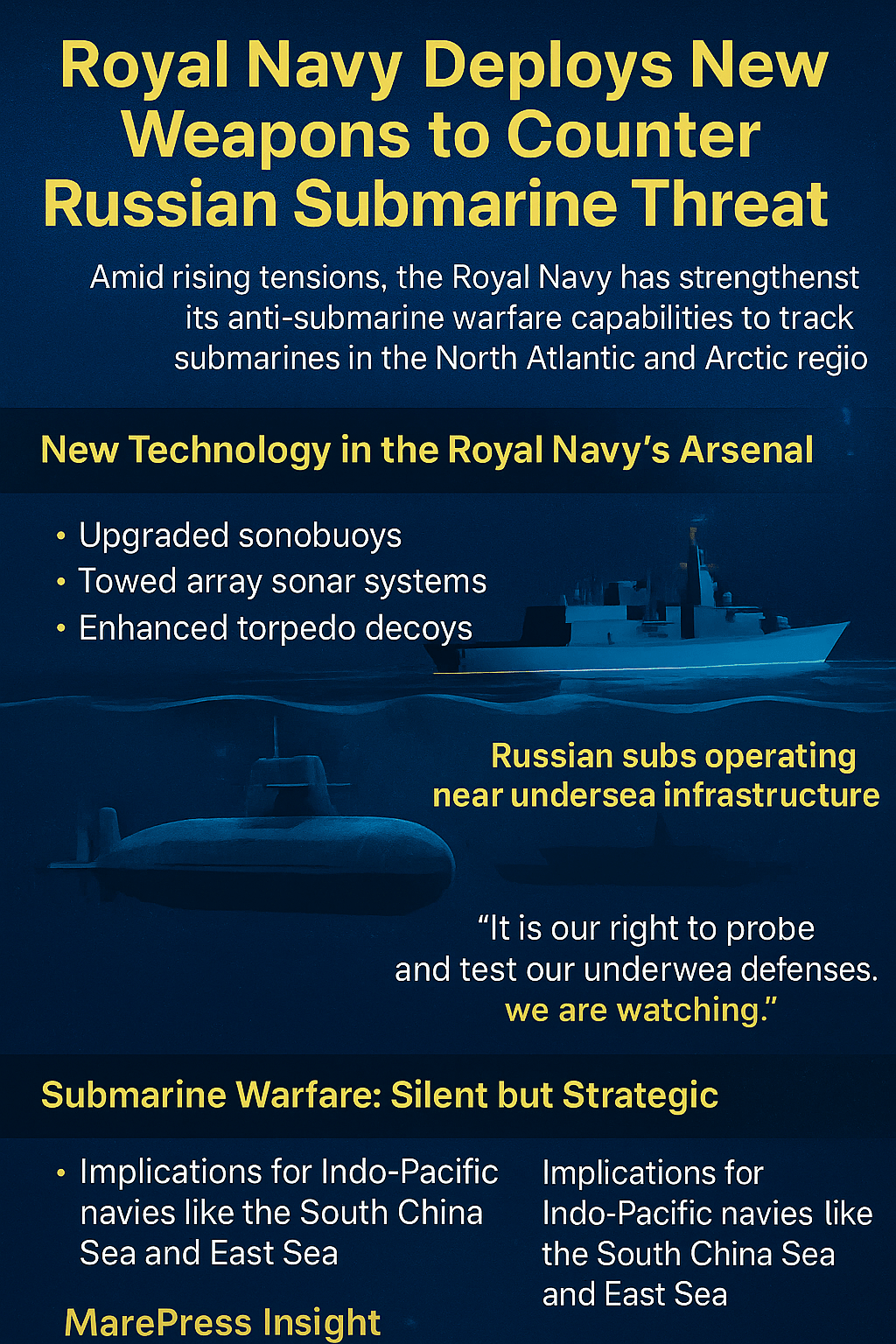
By MarePress Editorial Team
Keywords: Royal Navy, Russian submarines, underwater warfare, Indo-Pacific security, naval defense, submarine detection, maritime strategy, MarePress
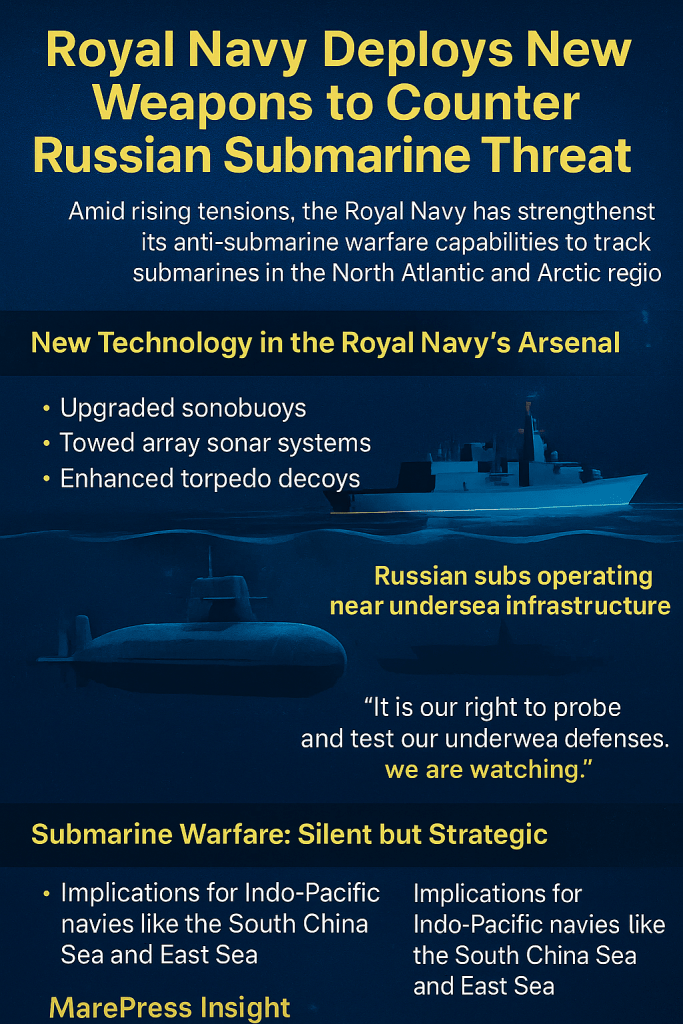
Amid rising tensions beneath the surface of European and global waters, the Royal Navy has intensified its anti-submarine warfare (ASW) efforts by deploying a suite of new underwater weapons and surveillance systems to track Russian submarines operating in the North Atlantic and Arctic regions.
This strategic move comes as Russian undersea activity surges near the UK and NATO maritime zones, prompting growing concern across defense ministries and maritime intelligence circles.
New Technology in the Royal Navy’s Arsenal
The Royal Navy has introduced upgraded sonobuoys, towed array sonar systems, and advanced torpedo decoys on its Type 23 frigates and Astute-class submarines. These new tools aim to increase the UK’s detection range and countermeasure readiness in the face of stealthy and aggressive Russian submarine patrols.
According to UK Ministry of Defence sources, Russian submarines now regularly operate near critical undersea infrastructure, such as data cables and offshore energy lines, potentially preparing for future disruptions in the event of geopolitical escalation.
Submarine Warfare: Silent but Strategic
Modern submarine threats are not just about direct attack—they target information infrastructure, oil lines, and strategic chokepoints. The UK government has warned that the seabed has become a new theater of war.
“Russia is trying to probe and test our underwater defenses,” said a senior naval commander. “Our message is clear: we are watching.”
These developments align with NATO’s broader push to reinforce undersea surveillance, especially in the GIUK gap (Greenland-Iceland-UK), where Russian subs often transit undetected.
MarePress Insight
The implications of these developments stretch far beyond the UK. For Indo-Pacific navies, particularly in regions like the South China Sea and the East Sea, this signals a continued shift toward underwater deterrence and critical infrastructure protection.
With submarine fleets growing in China, North Korea, and Russia, coordinated allied efforts in sonar sharing, seabed mapping, and joint anti-submarine patrols will be essential.
“Undersea dominance is the next frontier in maritime security—and it’s already underway.”
 You are now at Maritime Security Insights
Leave a comment