Posted by Mare | Indo-Pacific Security & Naval Tech Analysis
A New Era of Naval Warfare Begins in the Pacific
The United States Marine Corps (USMC) has begun deploying its newly developed “drone–killer ships” to a strategic Pacific ally, as part of its broader Force Design 2030 initiative. These vessels — likely Medium Unmanned Surface Vessels (MUSVs) — are being sent to bolster naval defenses amid increasing tensions with China in the South China Sea and broader Indo-Pacific region.
According to reports from Business Insider, these ships are equipped with advanced air defense and electronic warfare capabilities. Their primary mission? Detecting, tracking, jamming, and neutralizing hostile drones, including reconnaissance UAVs and so-called “kamikaze” drones that have proliferated across global conflict zones.
The Strategic Purpose Behind the Deployment
The deployment is not just a technological upgrade — it’s a strategic message. The U.S. is signaling that the Pacific won’t be left vulnerable to swarm drone threats or grey-zone naval aggression.
The Indo-Pacific, particularly flashpoints such as the Philippine Sea, Taiwan Strait, and South China Sea, has become a testing ground for next-generation naval tactics. By placing these drone-intercepting vessels in allied ports or forward-operating areas, the U.S. is enhancing deterrence without escalating traditional military presence.
These ships can operate autonomously or with limited remote input, extending patrol range and reducing crew risk. They’re not replacements for manned destroyers but are envisioned as force multipliers, operating in layered maritime defense structures.
How Do These “Drone-Killer” Ships Work?
The vessels function by integrating several key technologies:
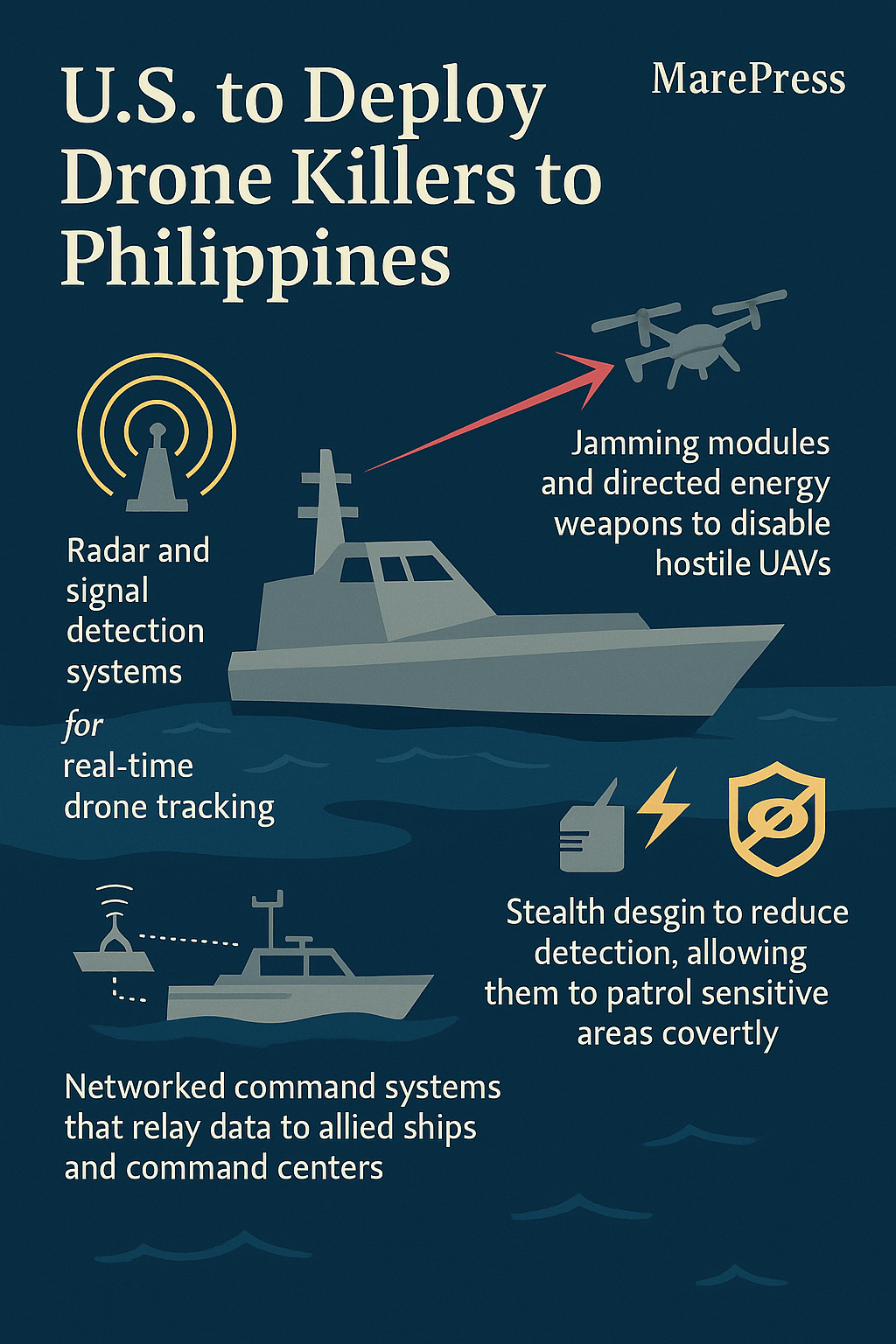
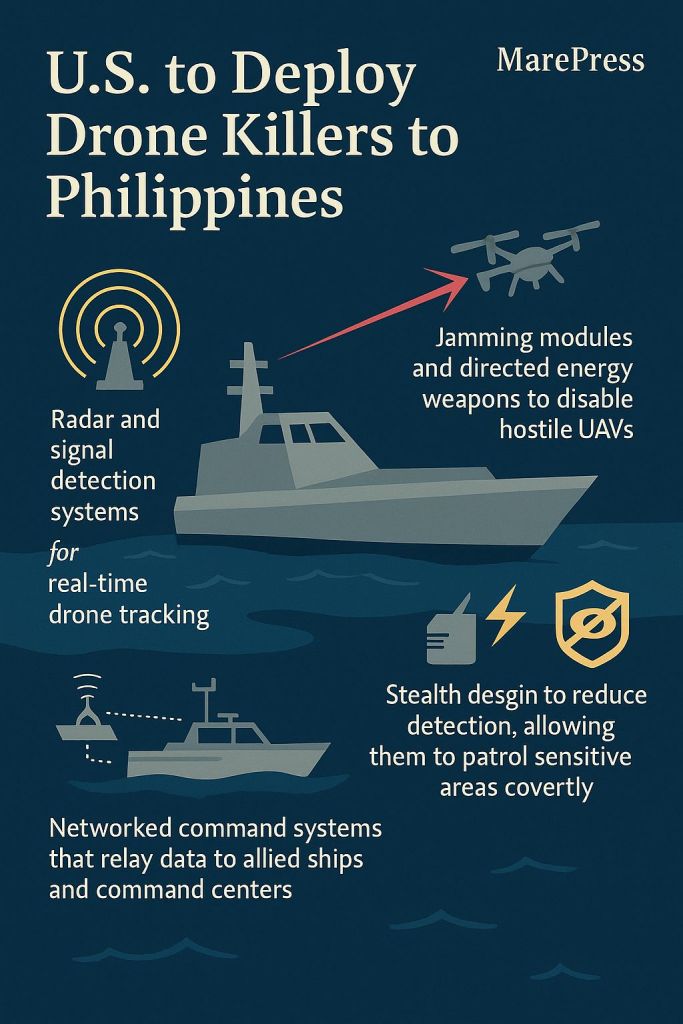
Radar and signal detection systems for real-time drone tracking
Jamming modules and directed energy weapons to disable hostile UAVs
Networked command systems that relay data to allied ships and command centers
Stealth design to reduce detection, allowing them to patrol sensitive areas covertly
By 2030, the Marines plan to fully integrate these ships into distributed fleet operations, allowing greater agility, scalability, and cost-effective deterrence in contested waters.
Why This Matters Now
China’s rapidly modernizing navy and drone capabilities — including swarms launched from artificial islands — present an evolving threat to allied operations in the Pacific. The U.S. recognizes that future maritime conflict may not begin with missiles or submarines, but with drone intrusions, sensor blinding, and electronic disruption.
The new ships represent the Marine Corps’ commitment to next-generation naval warfare and adaptivity in asymmetric threat environments.
Mare’s View
“In the Indo-Pacific chessboard, drones are the new pawns — cheap, expendable, and everywhere. But the U.S. just put a knight on the board.”
These drone-killer vessels don’t just patrol — they warn, counter, and signal that autonomous threats won’t go unanswered. It’s a technological line in the ocean.
 You are now at Maritime Security Insights
Leave a comment