Posted by Mare | Maritime Security Insights
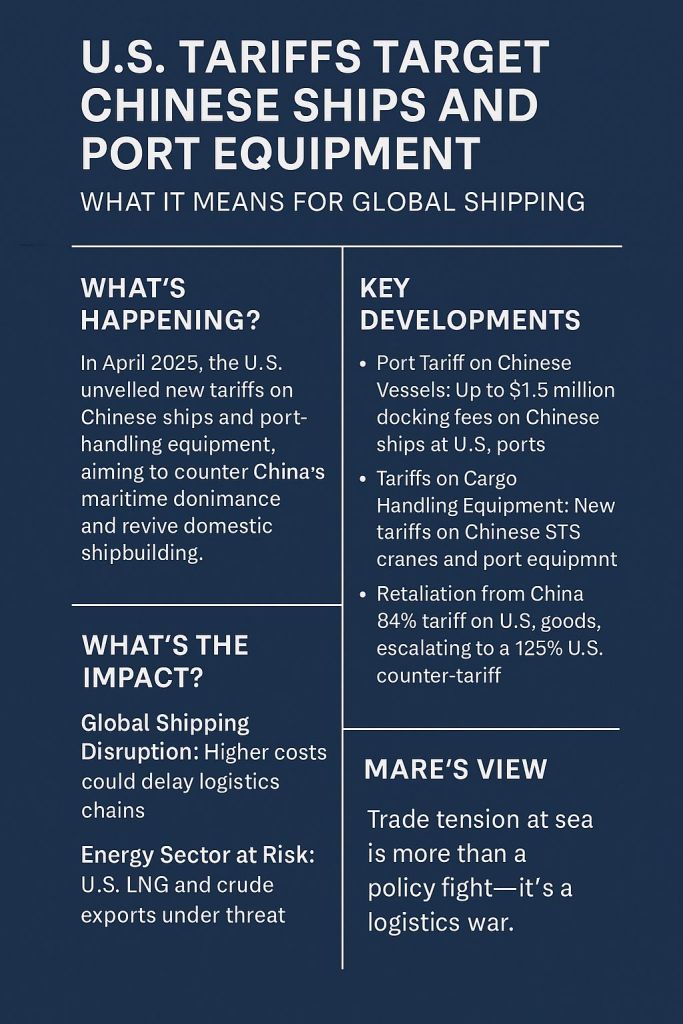
What’s Happening?
In April 2025, the United States significantly escalated its trade pressure on China by introducing new tariffs on Chinese ships and port-handling equipment. The move is part of a broader strategy to counter China’s dominance in global maritime logistics and revive U.S. shipbuilding.
Key Developments
1. Port Tariff on Chinese Vessels
The U.S. plans to impose up to $1.5 million in docking fees on Chinese-flagged vessels entering American ports.
This measure, signed by former President Trump, aims to reduce reliance on foreign tonnage and promote domestic shipbuilding.
2. Tariffs on Cargo Handling Equipment
Chinese-made STS cranes, container handling equipment, and other port infrastructure are now subject to new tariffs.
The justification? National security concerns and dependency on Chinese tech at critical ports.
3. Retaliation from China
In response, China imposed an 84% retaliatory tariff on select U.S. goods.
The U.S. countered with a 125% tariff hike on additional Chinese imports, escalating tensions further.
What’s the Impact?
Global Shipping Disruption:
Shipping companies are reconsidering routes through U.S. ports due to increased costs, potentially delaying logistics chains worldwide.
Energy Sector at Risk:
U.S. energy exporters are voicing concern. Higher port fees may reduce the competitiveness of U.S. LNG and crude oil in Asian markets.
“It’s a mess right now” – one global shipping CEO said, highlighting the growing uncertainty in global port operations.
Mare’s View
Trade tension at sea is more than a policy fight—it’s a logistics war.
With both the U.S. and China targeting maritime flows, shipping costs, port access, and energy exports may all become strategic weapons.
> For ports and shippers alike, this isn’t just about tariffs—
it’s about resilience in an era of geo-economic conflict.
 You are now at Maritime Security Insights
Leave a comment